

What Buyers Should Know Before Using It for Food Contact
Kitchen paper is widely used in both households and commercial kitchens.
However, a common misconception is that all kitchen paper products are automatically food-safe.
In reality, whether kitchen paper is suitable for direct food contact depends on raw materials, processing methods, and chemical use.
This article outlines the key considerations buyers and product managers should understand.
1. Not All Kitchen Paper Is Food-Safe by Default
Many standard kitchen paper products are designed for general household use, not specifically for food contact.
During manufacturing, some products may involve:
chlorine-based bleaching agents
optical brightening agents (OBAs)
synthetic binders or surface treatments
When exposed to heat, oil, or moisture, these substances may migrate, which raises food-contact safety concerns.
2. Why Kitchen Paper Requires Special Attention
Unlike other paper products, kitchen paper frequently comes into direct contact with food, such as:
absorbing oil from fried foods
holding sandwiches, bread, or snacks
covering containers during microwave heating
These use cases go beyond dry contact and require stricter material control.
3. Common Risk Factors Buyers Often Overlook
Bleaching residues
Non-chlorine-free bleaching processes may leave trace chemical residues.
Recycled fiber sources
While recycled paper supports sustainability goals, mixed paper sources can introduce ink residues or contaminants if not carefully controlled.
Optical brightening agents (OBAs)
OBAs are used to improve whiteness but are generally not recommended for long-term food contact.
4. What to Check When Sourcing Kitchen Paper for Food Contact
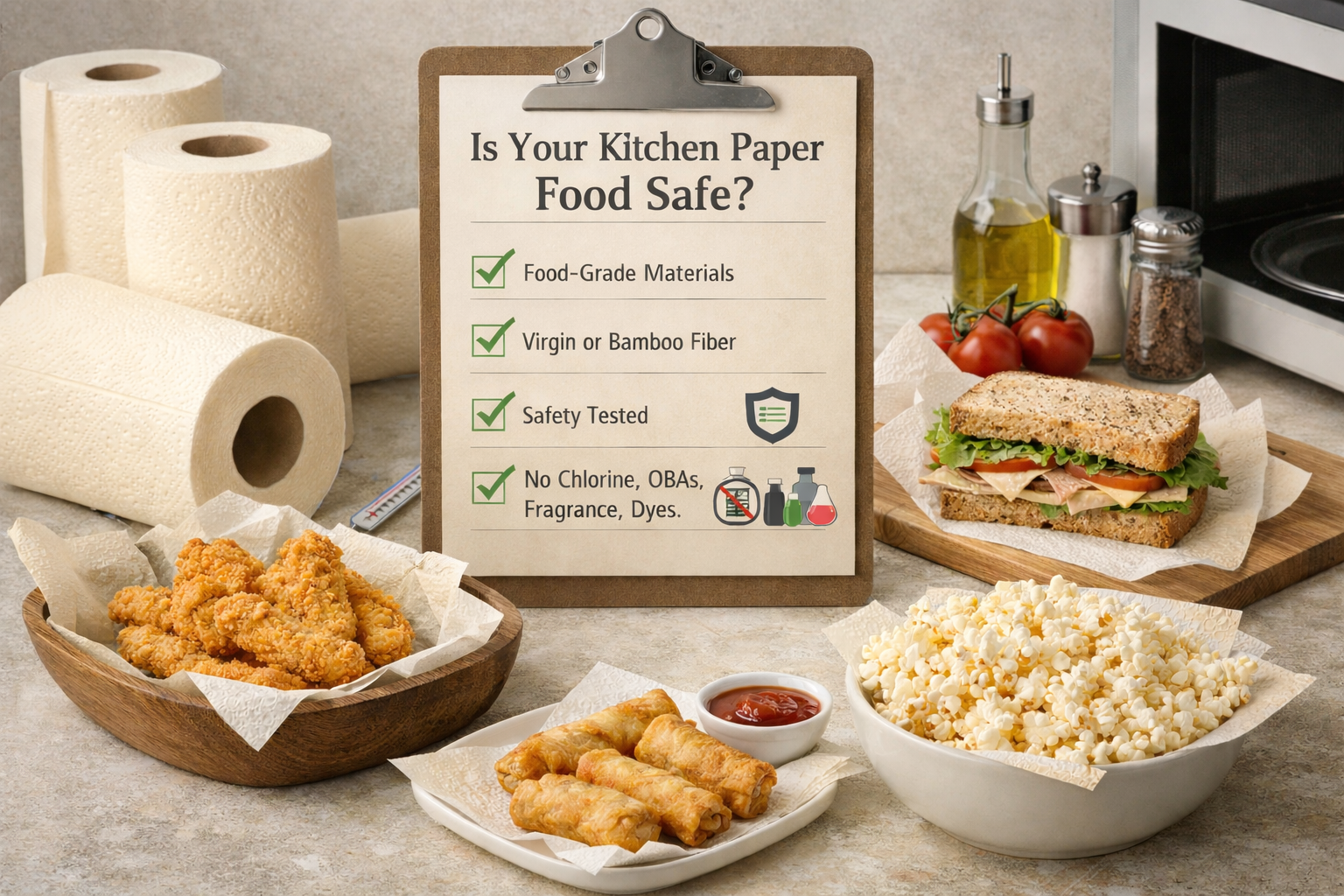
Before launching or importing a kitchen paper product, buyers should verify:
Clear food-contact or food-safe declarations
Use of virgin fiber or high-quality bamboo fiber
Absence of added fragrances, dyes, or unnecessary chemical coatings
Availability of food-contact test reports or supporting documentation
5. Practical Guidance
If food-contact safety is not clearly defined, kitchen paper should not be used for prolonged contact with oily or moist foods.
For brands and distributors, addressing food-contact considerations early in product development helps reduce compliance risk, consumer complaints, and long-term liability.
Conclusion
Kitchen paper is more than a functional household item.
When used in food-related applications, material transparency and processing standards matter.
Understanding these factors allows buyers to make informed sourcing decisions and build products that meet both safety expectations and market requirements.