

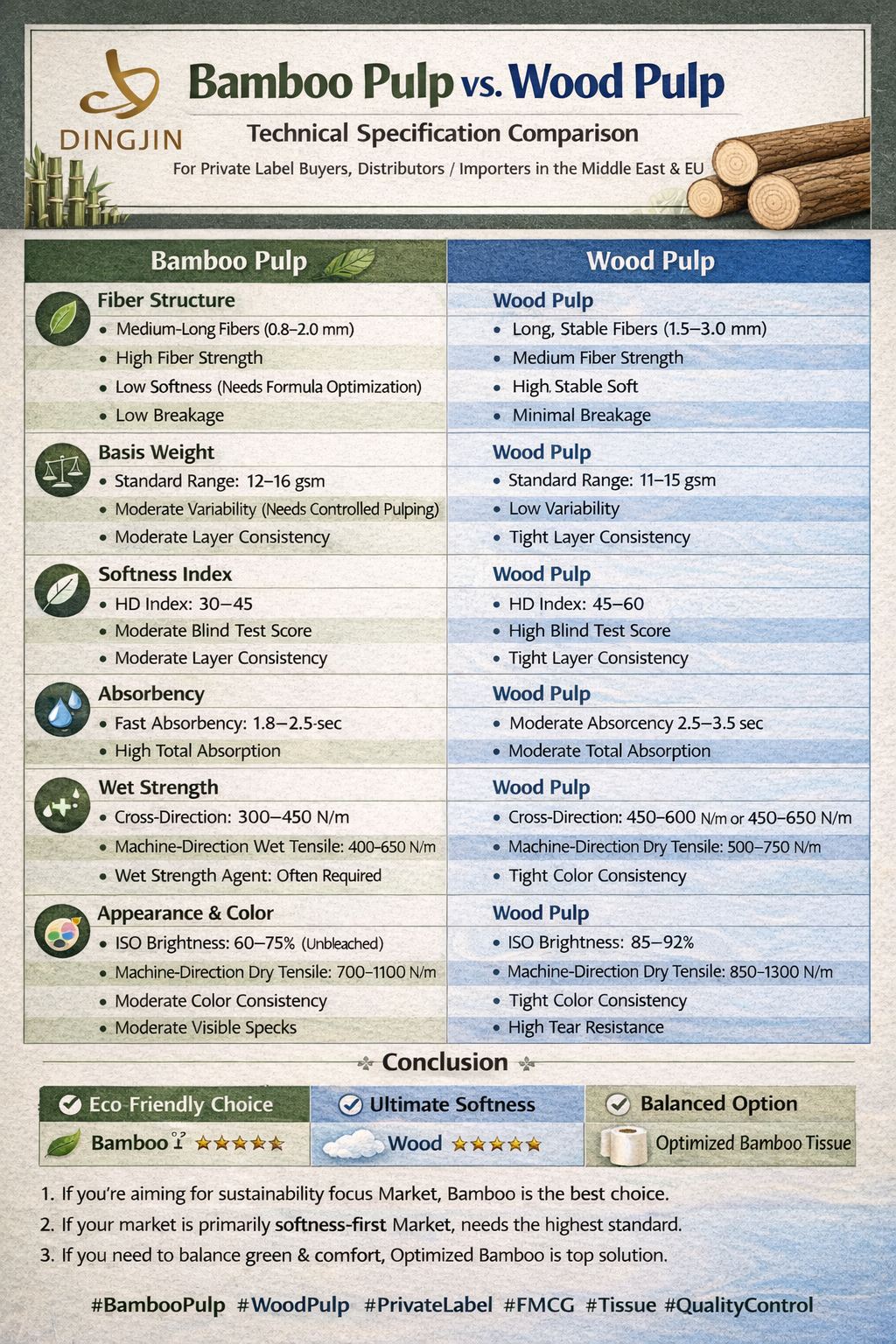
Bamboo Pulp vs. Wood Pulp
How Material Innovation Is Reshaping the Premium Tissue Segment
In today’s tissue market, “premium” is no longer defined by softness alone.
Sustainability credentials, material transparency, and overall user experience are increasingly influencing how high-end tissue products are developed and positioned.
Against this backdrop, both bamboo pulp and wood pulp are evolving into premium-grade solutions — through different value paths.
Performance Beyond Traditional Definitions
Wood pulp continues to deliver excellent softness and visual uniformity, making it a strong option for conventional premium tissue lines.
At the same time, bamboo pulp is rapidly gaining recognition in the premium segment, driven by advances in pulping technology and process optimization. Improved fiber treatment and sheet formation now allow bamboo-based tissue to achieve a refined handfeel while maintaining its inherent strength and absorbency.
A Shift in Premium Market Expectations
Rather than competing on a single attribute, premium tissue products are increasingly evaluated on balanced performance:
Comfort combined with strength
Absorbency without excessive bulk
Natural appearance aligned with sustainability values
In this context, bamboo pulp is no longer viewed as an alternative material, but as a strategic choice for modern premium positioning, particularly in markets where environmental responsibility is part of brand value.
Industry Trend Outlook
The premium tissue segment is moving toward material-led differentiation:
Wood pulp remains relevant for traditional luxury positioning
Bamboo pulp is emerging as a premium solution for sustainability-driven brands
Optimized bamboo-based tissue is bridging the gap between performance and environmental appeal
As consumer perception continues to evolve, premium is increasingly defined by how a product is made — not just how it feels.